tochat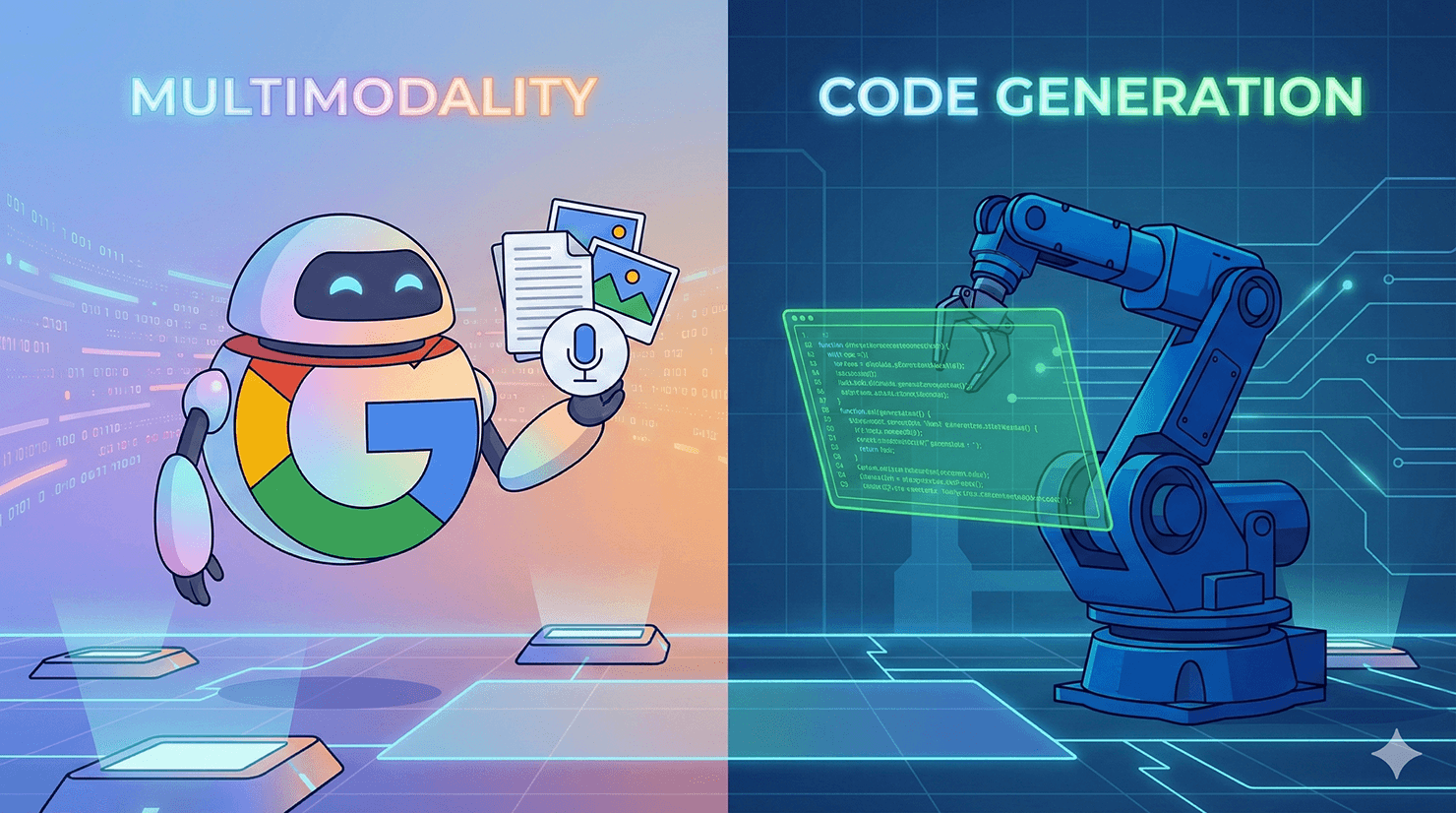
The AI landscape moves fast. Just when we thought the battle was settled between OpenAI and Google, a new challenger entered the ring: DeepSeek. This open-weights model has taken the tech world by storm, offering incredible performance at a fraction of the cost of its competitors.
But for business owners building AI agents on Tochat, the question isn’t just “which is cheaper?” or “which is hype?” The question is: Which model is better at doing the actual job?
In this Gemini vs. DeepSeek comparison, we break down the strengths of each model to help you decide which brain should power your digital workforce.
The Contenders
Google Gemini (The Multimodal Giant)
Gemini is Google’s flagship model family (Pro, Flash, Ultra). It is built from the ground up to be Multimodal, meaning it doesn’t just understand text—it understands images, audio, video, and code natively.
DeepSeek (The Coding Prodigy)
DeepSeek (specifically DeepSeek-V3 and R1) is an open-weights model from China that has shocked the industry. It excels at reasoning, mathematics, and coding, often matching GPT-4 class performance while being extremely efficient to run.
Round 1: Context Window (Memory)
If you are using Tochat to upload your company’s PDFs, employee handbooks, and product catalogs, Context Window is the most important metric. It determines how much data the AI can “read” at once.
- DeepSeek: Typically supports up to 128k tokens. This is respectable and handles most standard documents.
- Gemini 2.5: Supports up to 1 Million (and even 2 Million) tokens.
The Winner: Gemini.
Gemini’s massive context window allows it to digest entire books, massive codebases, or years of chat logs without “forgetting” the beginning. For businesses with heavy documentation, Gemini is unrivaled.
Round 2: Capabilities (Reasoning vs. Vision)
What do you need your agent to do?
DeepSeek shines in logic and code. If you are building an internal tool for developers to debug Python scripts, DeepSeek is fantastic. It is rigid, logical, and precise.
Gemini shines in versatility. Because it is multimodal, a Gemini agent can look at a photo of a broken product uploaded by a customer and diagnose the issue. It can parse complex visual charts in a PDF. It handles creative writing and conversational nuances better than the more rigid DeepSeek.
The Winner: Tie (Depends on use case).
Use DeepSeek for math/code. Use Gemini for customer service, sales, and anything involving visual data.
Round 3: Accessibility & Setup
How hard is it to get running?
DeepSeek often requires hosting it yourself or finding a third-party API provider, which can suffer from downtime due to massive demand. It is a “hacker’s favorite.”
Gemini is managed by Google infrastructure. It is incredibly stable, fast, and easy to access via Google AI Studio. You can get a key in seconds and it just works.
👉 Ready to start? Check our guide on how to get your free Google Gemini API Key in 2 minutes.
Why Tochat is Built on Gemini
At Tochat, we prioritize reliability and ease of use for our users. While we admire DeepSeek’s efficiency, Gemini remains our default engine for three reasons:
- Native RAG: Its massive context window makes your Knowledge Base search far more accurate.
- Safety: Google’s enterprise-grade safety filters ensure your brand doesn’t accidentally say something harmful.
- Speed: The “Flash” models provide near-instant responses, which is critical for keeping website visitors engaged.
Conclusion
DeepSeek is an incredible achievement for the open-source community, and it’s a great choice for technical, internal tasks. However, for a customer-facing AI agent that needs to be reliable, chatty, and knowledgeable about your business documents, Gemini is still the king.
Ready to build your Gemini-powered agent? Log in to your Tochat Dashboard and start building for free.