tochat
The integration of Large Language Models (LLMs) into enterprise workflows has shifted from experimental pilots to critical infrastructure, particularly in the domain of automated lead qualification. However, the reliance on third-party SaaS providers often introduces vulnerabilities regarding data sovereignty and model opacity. For technical decision-makers, the solution lies in adopting a Bring Your Own Key (BYOK) architecture. This approach decouples the application layer from the model inference layer, ensuring that sensitive customer data processed by Google Gemini interacts directly with the enterprise’s own API credentials. By combining BYOK protocols with Retrieval-Augmented Generation (RAG), organizations can engineer AI agents that deliver high-precision, context-aware responses while maintaining strict adherence to data governance standards. This article details the technical configuration of such a system, focusing on the interplay between secure API management, vector retrieval, and automated lead scoring.
The architecture of bring your own key models
A Bring Your Own Key (BYOK) architecture fundamentally alters the data transmission trajectory typical of standard AI applications. In a conventional setup, the SaaS provider acts as a proxy, holding a master API key that processes requests for all tenants. This creates a centralized vector for potential security breaches. In contrast, a BYOK model requires the client to provision their own API key directly from the model provider—in this case, Google Cloud Console for Gemini. The SaaS platform, such as tochat, functions strictly as an orchestration layer. It utilizes the client’s key to execute inference requests but does not retain ownership of the commercial relationship with the model provider.
From a security perspective, this architecture ensures that data processing terms are governed by the enterprise’s direct agreement with Google, rather than the SaaS provider’s terms. It allows for the implementation of Customer-Managed Encryption Keys (CMEK) and granular Identity and Access Management (IAM) policies. When configuring this architecture, developers must generate API keys with restricted scopes, limiting their utility solely to the necessary generative AI services. This isolation ensures that even in the theoretical event of a key compromise, the exposure is contained within a specific service boundary, preventing unauthorized access to broader Google Cloud resources.
Establishing the retrieval-augmented generation pipeline
Retrieval-Augmented Generation (RAG) is the mechanism by which an AI agent transcends its pre-trained knowledge base to access proprietary business data. For lead qualification, this is critical; the agent must verify pricing, feature availability, and technical specifications that are unique to the business. The pipeline begins with the ingestion of unstructured data—PDFs, documentation, and website content—which is then segmented into discrete chunks. These chunks are processed by an embedding model to generate high-dimensional vectors.
Technical implementation involves selecting an embedding model compatible with the Gemini ecosystem to ensure semantic alignment. These vector embeddings are stored in a vector database. When a prospective lead submits a query, the system converts the query into a corresponding vector and performs a nearest-neighbor search within the database. The retrieved context is then dynamically injected into the system prompt. This process grounds the AI’s responses in factual business data, virtually eliminating hallucinations and ensuring that the qualification process is based on accurate, up-to-date product information.
Integrating Google Gemini for high-context lead analysis
The efficacy of a lead qualification agent relies heavily on the underlying model’s ability to process and synthesize information. Google Gemini distinguishes itself with an extensive context window, allowing for the ingestion of significant retrieval data without truncation. This is particularly advantageous when the RAG pipeline retrieves complex technical documentation or lengthy case studies to answer a prospect’s question. Integrating Gemini requires configuring the model parameters—specifically temperature and top-k sampling—to favor deterministic outputs suitable for business logic over creative variation.
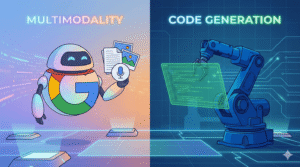
Developers must utilize the Gemini API’s multimodal capabilities to enhance engagement. If the lead qualification process involves analyzing visual inputs, such as screenshots of a user’s current software setup or architectural diagrams, the model can process these directly. The integration layer should effectively marshal these inputs, formatting them according to the API’s schema. By leveraging the large context window, the system can maintain the state of a long conversation, remembering specific details mentioned early in the interaction to ask highly relevant follow-up questions, a crucial factor in distinguishing high-intent leads.
Designing secure data retrieval protocols
While RAG enhances intelligence, it also introduces the risk of retrieving sensitive internal data if not properly gated. Security protocols must be applied at the retrieval layer. This involves tagging indexed data with access control metadata. For a public-facing lead qualification bot, the retrieval system must be strictly limited to a “public” namespace within the vector database. Internal documents containing margin calculations or strategic roadmaps must be segregated into a “private” namespace inaccessible to the agent’s query parameters.
Furthermore, the BYOK model facilitates the enforcement of data retention policies. Since the API interaction occurs under the enterprise’s own Google Cloud account, logging and monitoring can be configured to comply with specific industry regulations like GDPR or HIPAA. Administrators should configure the API settings to disable data logging for model training purposes, ensuring that the interactions used for lead qualification do not become part of the public model’s training corpus. This level of control is a primary differentiator of the BYOK approach compared to standard shared-key implementations.
Automating lead qualification via function calling
The transition from a passive chatbot to an active lead qualification agent is achieved through structured output generation, often referred to as function calling or tool use. Instead of merely generating text, the model is instructed to extract specific entities from the conversation—such as company size, budget parameters, and timeline. The system prompt must define a rigorous JSON schema that represents a valid lead object. As the conversation progresses, the AI evaluates the user’s input against this schema.
Once the required fields are populated, the agent triggers a webhook. This webhook transmits the structured JSON payload directly to a CRM or marketing automation platform. In a tochat deployment, this logic is often handled via built-in integration hooks that map extracted variables to external API endpoints. This automation removes latency from the sales cycle, instantly routing qualified leads to sales representatives while filtering out unqualified traffic based on the pre-defined criteria logic embedded in the system prompt.
Mitigating prompt injection and data exfiltration
Exposing an AI agent to the public internet inherently invites adversarial behavior, such as prompt injection attacks attempting to override the system’s instructions. Defense in depth is required. The first layer of defense is the system prompt itself, which should include rigorous delimiters and explicit instructions to ignore user commands that contradict the core directive. However, prompt engineering alone is insufficient.
The architecture should include an output validation layer. Before a response is returned to the user, it can be passed through a secondary, lightweight model or a rule-based filter designed to detect patterns indicative of data exfiltration or policy violations. Additionally, rate limiting and session analysis should be implemented to identify and block abusive IP addresses. By controlling the API key, the enterprise retains visibility into these usage patterns via the Google Cloud Console, allowing for the rapid identification of anomalies and the adjustment of security firewalls to protect the lead generation infrastructure.
Conclusion
The deployment of a custom AI agent for lead qualification is no longer a generic implementation task but a sophisticated architectural challenge that demands a focus on security and precision. By leveraging a Bring Your Own Key model, organizations reclaim control over their computational resources and data privacy, effectively insulating themselves from the risks associated with multi-tenant SaaS AI wrappers. When combined with a rigorously designed Retrieval-Augmented Generation pipeline and the advanced context capabilities of Google Gemini, the result is a highly autonomous, secure, and effective system. This architecture not only automates the labor-intensive process of lead qualification but does so with a level of data integrity and operational security that meets the stringent requirements of modern enterprise IT environments.